Remembering what we've lost
Welcome to "Wish You Were Here," my syndicated column dedicated to preserving the iconic memories of baby boomers. Join me on a journey through cherished people, places, and things that, though gone, remain forever in our hearts.
The "Wish You Were Here" column
"Wish You Were Here" is a recurring syndicated column that honors what we have lost: the people, places, and things so iconic, so deeply woven into the American experience, that we once believed they could never leave us. And yet, here we are. This column serves as a heartfelt tribute to those indelible memories that shaped a generation. This not an act of nostalgia, it is an act of preservation.

For every generation
While this column deeply resonates with baby boomers, its themes of loss, memory, and cultural impact speak to everyone. We invite you to explore these stories, reflect on your own experiences, and perhaps discover new perspectives on the things that have shaped our shared history.
Explore more of Brad L. Johnson's work
After immersing yourself in the "Wish You Were Here" column, we encourage you to delve deeper into my other writings. Discover a wide range of topics and stories that will engage, entertain, and provoke thought. There's always something new to explore on the Online Home of Writer Brad L. Johnson.

Newsboys
WISH YOU WERE HERE
By Brad L. Johnson
The "you" in the title of this series are People, Places & Things that were so iconic, so deeply woven into the American Experience that we once believed they could never leave us. And yet, here we are. It honors what we have lost. It is not a nostalgia act. It is an act of preservation.
NEWSBOYS
It was September 11, 2001. I was living in Santa Ana, California — freshly divorced after twenty-five years, a man hollowed out by ordinary loss on the day America was hollowed out by something else entirely. I was making a quick run to the grocery store when I heard it.
"EXTRA! EXTRA! America ATTACKED!"
The voice belonged to a boy. He wore an English newsboy cap, suspenders, and — God help me — knickers. He stood in front of that Ralphs supermarket like a ghost stepping through a tear in time, waving copies of the Orange County Register with the urgency of someone who understood, in his bones, what this moment required. I bought four copies. I don't know why four. I just knew I needed to hold something in my hands.
Standing there on that sidewalk, something caught in my throat that I couldn't name until later. It was recognition. I finally understood what it must have felt like — truly felt like — to hear that voice cut through the noise on the day the stock market crashed, or when the boys shipped out for the Second World War, or when they finally came home. A child's voice, raw and unpolished, carrying the weight of history under one arm.
That voice has deep roots in America's story.
From the mid-1800s through the early decades of the twentieth century, the Newsboy was as fundamental to city life as the cobblestone and the gas lamp. At their peak, nearly half a million of them worked the corners — boys, mostly, some as young as six or seven, their days starting before sunrise in cold alley doorways, their arms wrapped around stacks of papers they had purchased themselves. If they sold every copy, they ate. If they didn't, they absorbed the loss out of whatever thin margin of hope they'd managed to save.
They were small entrepreneurs in the most unforgiving sense of the word: no safety net, no guaranteed wage, no adult standing behind them with a warm meal and a reassuring word. Just the stack of papers, the corner, and their voices — those magnificent, relentless, theatrical voices cutting above the clatter of horse hooves and trolley cars.
"EXTRA! EXTRA! READ ALL ABOUT IT!"
They were not merely selling news. They were performing it. Every headline became theater, every edition a one-act play, the whole city their stage.
Not everyone was charmed by what they represented, of course. Publishers, ever protective of their margins, sometimes conspired with one another to keep Newsboy wages suppressed. When that wasn't enough, some turned to harder persuasion — men like Lucky Luciano provided the "muscle" to ensure boys stayed loyal to a single paper and swallowed whatever terms they were given. The Newsboys struck back when they could. In the late 1800s, they organized work stoppages that would have impressed a seasoned labor organizer. But a child's leverage, however spirited, has its limits.
Then came 1938, and the Fair Labor Standards Act, and with it the slow, legal erasure of child labor from American commerce. The ranks thinned. The corners grew quieter. By 1993, the Newspaper Association of America recorded that Newsboys accounted for just one percent of all newspaper sales — a footnote in a ledger that had once held half a million names.
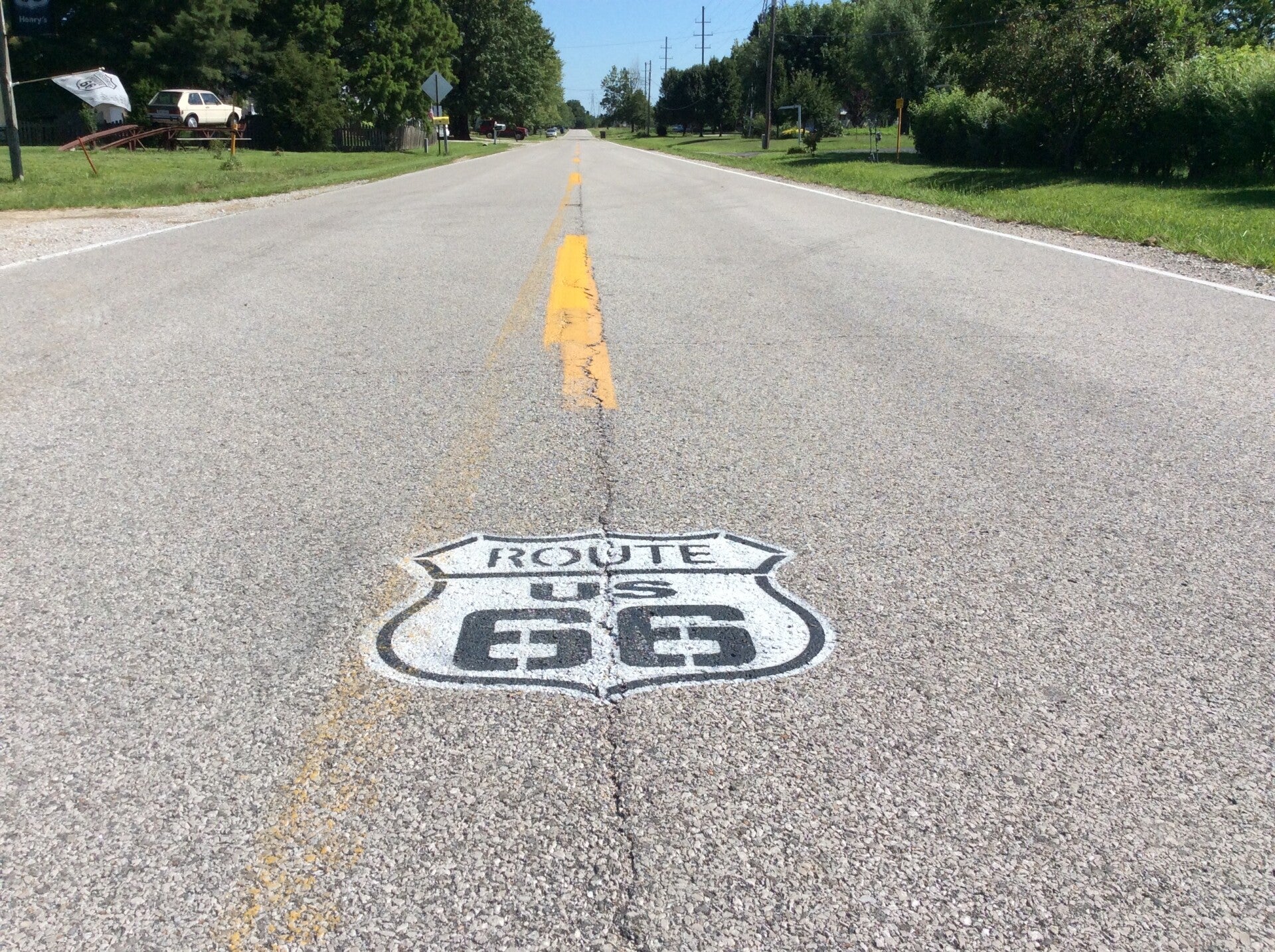
I was born in Rockford, Illinois in 1954, and I grew up watching them work with something close to envy. They were my age, some of them, and they had what every boy wants most: a reason to be out in the world, a purpose, a voice that mattered. When my family packed into a big station wagon in 1961 and headed west along Route 66 toward Southern California, I left them behind along with everything else that Rockford held.
But I took the dream with me. At eleven years old I became a Newspaper Boy myself — not a street-corner Newsboy in the old tradition, but close enough to feel the connection. I had a gold metal-flake Stingray bike and a route of 110 customers for the soon-to-be-defunct Los Angeles Herald Examiner. I didn't have to buy my own papers or dodge the mob. I was the suburban echo of something that had once been urgent and wild.
Then, television arrived. Then the coin-operated vending machine — cheap, mute, entirely without theater. Then the internet swallowed what remained.
That boy outside the Ralphs supermarket on September 11th understood something the rest of us had forgotten: that there are moments in American life that demand to be announced by a human voice. Not a notification. Not a chyron scrolling across a screen. A voice. A child's voice, if possible — because there is something in that combination, the gravity of history delivered through the instrument of innocence, that cuts straight through to wherever it is we keep the things that matter.
You will likely never hear that voice on a street corner again. Neither will your children, nor theirs.
But somewhere in the marrow of this country, the brash and undefeated spirit of that American kid — the one who bought his papers before dawn and stood his ground and hollered his heart out above the noise of the world — that spirit does not die.
I just wanted you to know. And remember.


Chicken Delight
Wish You Were Here
By Brad L. Johnson
The “you” in the title of this series are People, Places & Things that were so iconic, so deeply woven into the American Experience that we once believed they could never leave us. And yet, here we are. It honors what we have lost. It is not a nostalgia act. It is an act of preservation.
Places: Chicken Delight
“Don’t cook tonight…call Chicken Delight!” OK OK…you got me. The Chicken Delight chain of restaurants are not completely gone, but they might as well be unless you live near Metro New York were, sadly, there are the last remaining 6 stores left (Canada still has 20).
For Baby Boomers, Chicken Delight was a pioneer in the restaurant industry. Al Tunick started the company in 1952 in Rock Island, IL following the purchase of pressure fryers to cook chicken that had been regulated, by habit, to pan frying, steaming or oven cooking. By the mid 60’s they were one of the largest fast food franchises in the US. They virtually started the delivery craze as they served their signature chicken in a bucket, ribs, pizza and fish and shrimp. Even though Kentucky Fried Chicken was born the same year, they lagged far behind Al’s chain. On July 27th, 1953 the Korean War ended. But by then an untold amount of housewives had jobs to supplement their household while awaiting their husbands return to from the military. They answered the clarion call in the jingle in droves and by the 60’s Al had opened over 1000 locations. I was born in 1954 and travelled to California as a kid in 1961, I remember stopping at a Chicken Delight somewhere along Route 66. The funny little hen cartoon and distinctive yellow and pink buckets were a hit.
Even into the late 60’s and early 70’s this franchise seemed a viable enterprise to invest in. In 1971 my folks bought a Chicken Delight franchise in La Habra, CA. I was a Junior in High School and perfected my driving skills by delivering food in a Scout Jeep with a big ‘ol “hot box’’ in the back kept warm with a can of Sterno. Most of the more exciting stories are left untold (how, for example our customers would answer the door) or shouldn’t be told (ahhh yes, the chicken fat fights). Then KFC, backed by loads of money and marketing expertise slowly caught up. They allegedly stole Chicken Delights recipe and introduced its “Extra Crispy” line of chicken. Then the franchisees, bowing to the competition, began trying to find ways to mitigate their losses. Quality suffered . As far as my folks were concerned, the quality could always be improved beyond the rigorous demands of purchasing exclusively from the chain company vendors. My dad got his amazing rib sauce from some guy who made it in his garage, my 70 year old “Gramma Goldie” worked all day making real honest to goodness home made rolls to accompany the meals. Everything was made from scratch, sauces, coleslaw, hand cut pieces from whole chickens, local beef ribs, pizza…everything. That kind of innovative, fly by the seat of your pants, do the best you can effort has been replace by so many County, City and Franchise rules and regulations that well most fast food franchises are all kinda the same…and they don’t deliver. My siblings and I, during the Annual Corn Festival in La Habra, CA even rode our bikes down the parade route selling chicken wings for a quarter and soda pop. That, sadly, never happens any more.
The large food chains are cookie cutter institutions that have forced us to seek out small “mom & pop” restaurants and have Uber Eats or DoorDash do the delivering. Yup no more big chickens on the tops of delivery cars.


TV Guide, Test Patterns & Variety Shows
Wish You Were Here
By Brad L. Johnson
The "you" in the title of this series are People, Places & Things that were so iconic, so deeply woven into the American Experience that we once believed they could never leave us. And yet, here we are. It honors what we have lost. It is not a nostalgia act. It is an act of preservation.
Things: TV Guide, Test Patterns & Variety Shows
There was a time when television was a ritual.
Not a stream. Not a queue. Not an algorithm whispering “you might also like” into the dark. It was a shared ceremony — a flickering altar in the living room, its glow touching every face in the house, its schedule carved in ink and paper, its silence as final and absolute as a pulled curtain.
We were the remote control back then. Literally. We were the kids on the floor, cross-legged in front of a screen that required a human being — us — to rise, cross the room, and turn a chunky, satisfying knob to change one of the five or six channels that existed. We were the technology. And somehow, impossibly, it was enough.
Most generations that followed will never know what that felt like. We're still not sure whether to pity them or envy the simplicity they'll never miss.
TV Guide
Before the infinite scroll, there was the magazine.
On April 3rd, 1953, TV Guide debuted nationally — small as a paperback, modest as a grocery receipt, mighty as gospel. One and a half million copies. Ten cities. A cover story on Lucille Ball's newborn son that stopped newsstands cold. The country bought it up like bread before a storm.
By the 1960s, it was the most widely read magazine in America. Fifteen cents at launch — a dollar eighty-one in today's money — rising to a quarter as the decade turned. Digest-sized, pocket-friendly, indispensable. You couldn't move through a checkout line without it catching your eye, practically leaping from the rack with the week's promise folded inside: here is what matters, here is when it starts, here is your world.
It was the Holy Grail of intention. It meant you didn't just watch — you chose. You circled. You planned. You committed.
Technology made it obsolete the way the highway made the general store obsolete — not with malice, just momentum. The channels multiplied. The seasons blurred. Streaming dissolved the very concept of "when it's on." And somewhere in that dissolution, something quiet and civilizing disappeared with it. Call it curation. Call it anticipation. Call it the simple dignity of knowing what came next.
On a personal note, my son Joshua (now 48 yrs old) shared a story about TV Guide. When he was in his Sophomore year at Anaheim High School in California and a “Bridge” student in College he took a test to graduate from High School early. One of the requirements on the test that he was required to be able to accurately read the listings in TV Guide. I’m betting that’s no longer the case.
The Test Pattern
Here is something the night used to say “ enough.”
Once, in America, television stations stopped. Sometime after midnight, the signal simply ended. Not paused. Not buffered. Ended. And in its place appeared one of the strangest, most haunting images the medium ever produced — the test pattern.
A Native American chief in full headdress, rendered in severe geometric lines, floating at the center of a striped cross. Concentric rings like a target. The number 30. Surrounding it all, a graph of graduated symbols that suggested meaning without offering it — a visual language spoken only by engineers and the sleepless.
And the sound. That single, sustained tone — boooooooooop — low and absolute, filling the living room like a tide coming in, announcing the end of the broadcast day with all the ceremony of a closing hymn.
My father used to fall asleep in front of the set. On those nights, I'd stumble in from the hallway, half-dreaming, and find him there — the blue light on his face, the room otherwise dark, that tone filling the silence. It wasn't eerie. It was, in its strange way, sacred. A boundary. A reminder that even the machine needed rest.
The world went 24 hours sometime around 1980. Infomercials rushed in to fill the void. The test pattern vanished, and with it, the radical idea that some things are allowed to stop.
Variety Shows
And then there were the nights when television sang, danced, performed skits, comedy and much more…all in the same show usually within the confines of one hour.
Not metaphorically. Literally. A stage would appear on your screen, a curtain would part, and a human being — fully present, genuinely talented, sometimes transcendent — would perform for you. For your living room. For your family gathered on the couch and the floor and the good chair no one was supposed to sit in.
My father and I watched Ed Sullivan with the reverence of congregation. The Judy Garland Show. Red Skelton, who could make a man laugh until he wept without saying a word. Dean Martin, who seemed to be having more fun than anyone alive. Hollywood Palace, where glamour was still a living, breathing thing.
Later, my ex and I found our own era — Sonny & Cher bickering and harmonizing in equal measure, Glen Campbell making the banjo sound like a conversation with God, the Smothers Brothers threading politics into comedy like a wire through silk, Barbara Mandrell bringing country music to people who didn't know they needed it. A few held on into the eighties. Dolly Parton showed up and reminded everyone what a television presence actually looked like.
Now we have Saturday Night Live — beloved, aging, occasionally brilliant — and the competition shows, where talent is a contest with a winner and a runway. It isn't nothing. But it isn't that.
That was communion. That was the whole country watching the same person, at the same moment, feel something together.
You've got YouTube now. Go find what you missed. Watch Judy Garland sing "The Man That Got Away" in 1963 and tell me that isn't worth an hour of your evening.
Some things, once seen, stay.
---
"Wish You Were Here" is an ongoing series honoring the people, places, and things that shaped the American Experience — and left a mark worth remembering.


